
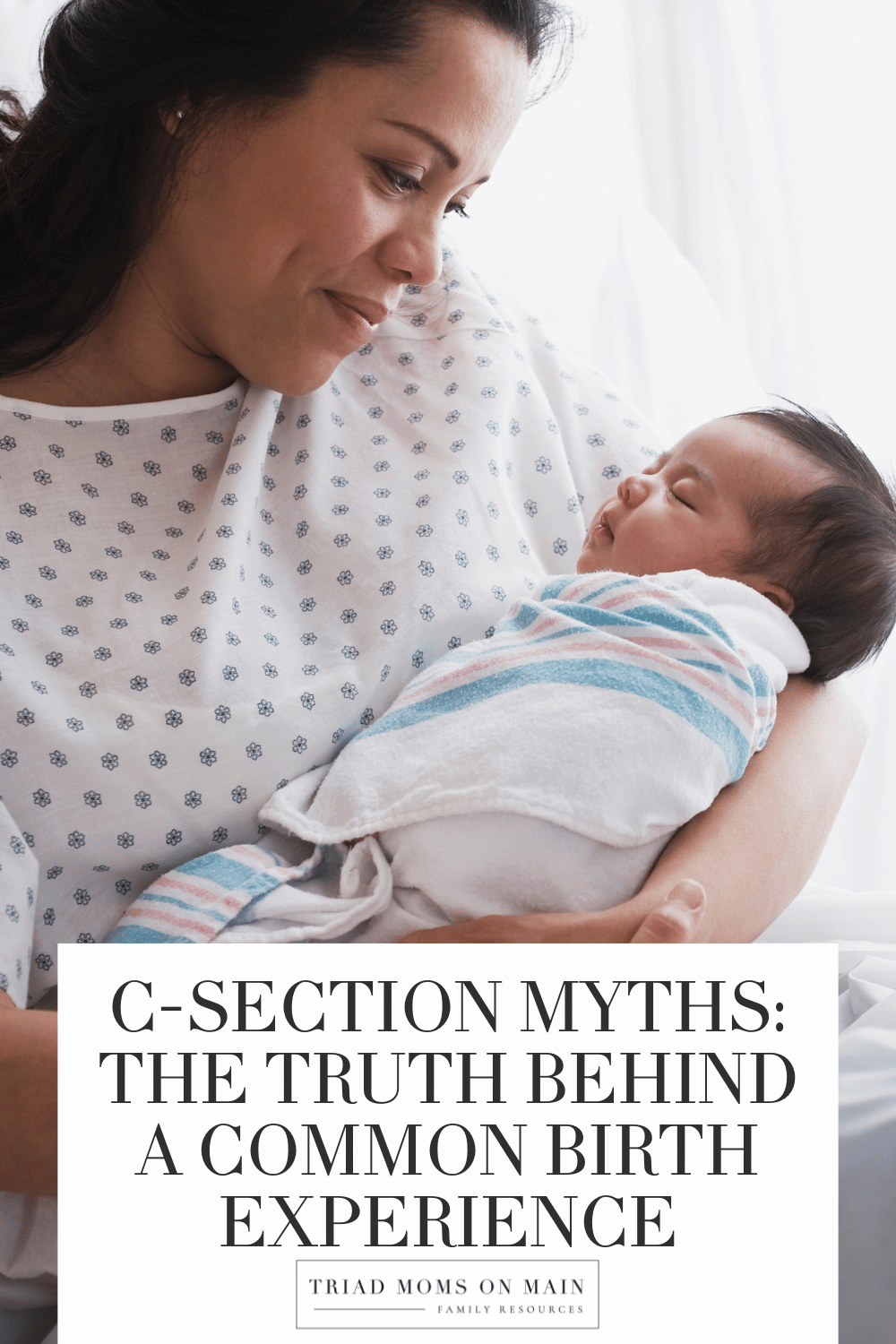
C-section myths: The truth behind a common birth experience
The blog is written and sponsored by Melissa Davies, MD, ob-gyn with Novant Health.
A C-section is the most frequently performed major surgery in the United States – but many women are misinformed about what really happens. Melissa Davies, MD, an ob-gyn with Novant Health, helps separate fact from fiction.
Myth 1: A C-section is an easier way to give birth.

Truth: A C-section combines childbirth with major abdominal surgery at the same time. Recovery takes time and often includes pain and limited movement.
Patients may avoid the intense labor pains of a vaginal delivery, but some women are in labor first before surgery becomes necessary. This means they experience both labor and surgical recovery. This is not the “easy way out.”
Myth 2: Your stomach muscles are cut during a C-section.
Truth: Contrary to popular belief, surgeons actually separate the layers of muscles and pull them aside to access the uterus. They are moved, not cut, which supports healing.
Myth 3: You’ll be put to sleep for a C-section.
Truth: In most cases, patients are awake although the lower half of their body is numbed by a spinal block, an epidural block or combination of both. You can feel touch, pressure and discomfort – but not sharp pain. Once the team confirms the baby is healthy, your newborn is put on your chest immediately, even while the team is sewing up the abdomen.
Myth 4: You won’t have postpartum bleeding or other issues.

Truth: Postpartum bleeding happens for up to six weeks after delivery whether you had a C-section or vaginal birth. This happens because the place where your placenta detached from the uterus is like a scab has been torn off. Your uterus continues to push this blood out as it contracts and shrinks.
In addition, pregnancy itself weakens the pelvic floor. Therefore, both vaginal and C-section deliveries can result in pelvic organ prolapse, which is when one or more of your pelvic organs drops into or outside of the vagina.
Myth 5: Doctors encourage C-sections so they can make more money.
Truth: A C-section costs more as it requires more resources – time, staff and an operating room – than a vaginal delivery. However, doctors do not earn significantly more from performing surgery. In fact, there is a nationwide movement to decrease C-section rates when possible as a vaginal delivery is generally better for mom and baby.
Myth 6: If you’ve had one C-section, you have to have a C-section with future babies.
Truth: It all depends on the type of incision made during your C-section. Most procedures involve a low transverse incision to access your uterus. This type of incision means you may be a candidate for a vaginal birth in the future, or you may choose to repeat a C-section. Each situation is unique and it is important to talk with your doctor.
Myth 7: Elective C-sections are ‘unnatural, unnecessary or selfish.’
Truth: There are valid reasons why a woman may need or request an elective C-section. Previous birth trauma, medical concerns, trauma or sexual abuse that makes the labor and delivery environment difficult, a baby that is very large or mom is having twins or multiples – all of these are reasons why a woman may choose a C-section and we support a woman’s choice.
Myth 8: A C-section is failure.
Truth: Many women feel pressure to have a specific type of birth and if a mom requires or chooses a C-section she may feel shame from others. We tell patients that childbirth does not follow one “correct” path. You created this beautiful new life and regardless of your choice, this child is still being birthed. All that matters is that we have a healthy baby.
For more information or to learn more about maternity services in the Triad, visit NovantHealth.org/maternity.
Instagram | Facebook | Website
Want to see more blogs like this and also get notifications on local events and happenings? Subscribe to our free weekly newsletter.