
Lunar New Year: What It Is, When It Happens & How Families Can Celebrate
The Lunar New Year is one of the most widely celebrated holidays in the world, marked by vibrant traditions, family gatherings, and meaningful customs that welcome a fresh start. Whether you’re wondering what Lunar New Year is, when it takes place, or how to celebrate it with kids, this guide covers everything you need to know – all in one place.
This post combines cultural background, traditions, zodiac animals, and family-friendly celebration ideas to help you honor the holiday thoughtfully and joyfully.
What Is Lunar New Year?
Lunar New Year marks the beginning of the new year based on the lunar calendar, which follows the cycles of the moon. While often referred to as Chinese New Year, Lunar New Year is celebrated across many cultures, including Chinese, Korean, Vietnamese, and other East and Southeast Asian communities for over 3,000 years. Rather than lasting just one day, Lunar New Year celebrations traditionally span 15 days, beginning with the new moon and ending with the Lantern Festival.
How Lunar New Year Started
The Legend of Nian tells the story of how the Lunar New Year started. In Ancient China, there was a horrible beast called Nian. He appeared on the darkest night of the year, or the Lunar New Year. Every year he came to a village and scared the villagers, eating their crops and animals. One year an old beggar came to the town. An elderly villager gave him shelter and food. In exchange, he showed the villagers that Nian would be scared away by loud noises, fire, and the color red. The villagers fought back and were able to scare Nian away. Following this legend, people celebrate the Chinese New Year with the color red, firecrackers, and noisemakers. Here is a video explaining the Legend of Nian and some of the traditions surrounding the Chinese New Year: Legend of Nian
When Is Lunar New Year?
A common question each year is: When is Lunar New Year?
The date changes annually because it follows the lunar calendar. It typically falls between late January and mid-February.
Key Dates
When is Lunar New Year 2026?
Lunar New Year 2026 begins on February 17, 2026.
Because the date shifts each year, many people search for “when is Lunar New Year” or “when is Lunar New Year 2025”
Local 2026 Lunar New Year Events
- Lunar New Year Celebration Event – Greensboro History Museum Feb 7 11am – 4:30pm
- Lunar New Year Festival – Wake Forest – Saturday, February 21, 2026 5pm to 7pm
- Gallop into the Lunar New Years at Glenwood Library – Monday, Feb 16 from 3 pm to 4 pm
- NC Chinese Lantern Festival
- Chinese Lantern Festival
Lunar New Year Animals & Zodiac Explain
Each Lunar New Year is associated with one of 12 zodiac animals, which rotate in a repeating cycle. These animals are believed to influence personality traits and fortunes for the year.
The 12 Lunar New Year Animals
- Rat
- Ox
- Tiger
- Rabbit
- Dragon
- Snake
- Horse
- Goat
- Monkey
- Rooster
- Dog
- Pig
Lunar New Year 2026 Animal
2026 is the Year of the Horse, specifically the Fire Horse.
The Lunar New Year Horse is often associated with energy, independence, confidence, and a love of freedom. People born in the Year of the Horse are commonly described as enthusiastic, hardworking, and social, with a strong sense of adventure and determination.
Learning about Lunar New Year animals is a fun and engaging way to introduce kids to the holiday while exploring personality traits, cultural traditions, and the meaning behind each zodiac year.
Lunar New Year Traditions Around the World
While traditions vary by culture and region, many Lunar New Year traditions share common themes of renewal, luck, and togetherness.
Common Traditions Include
- Cleaning homes to sweep away bad luck
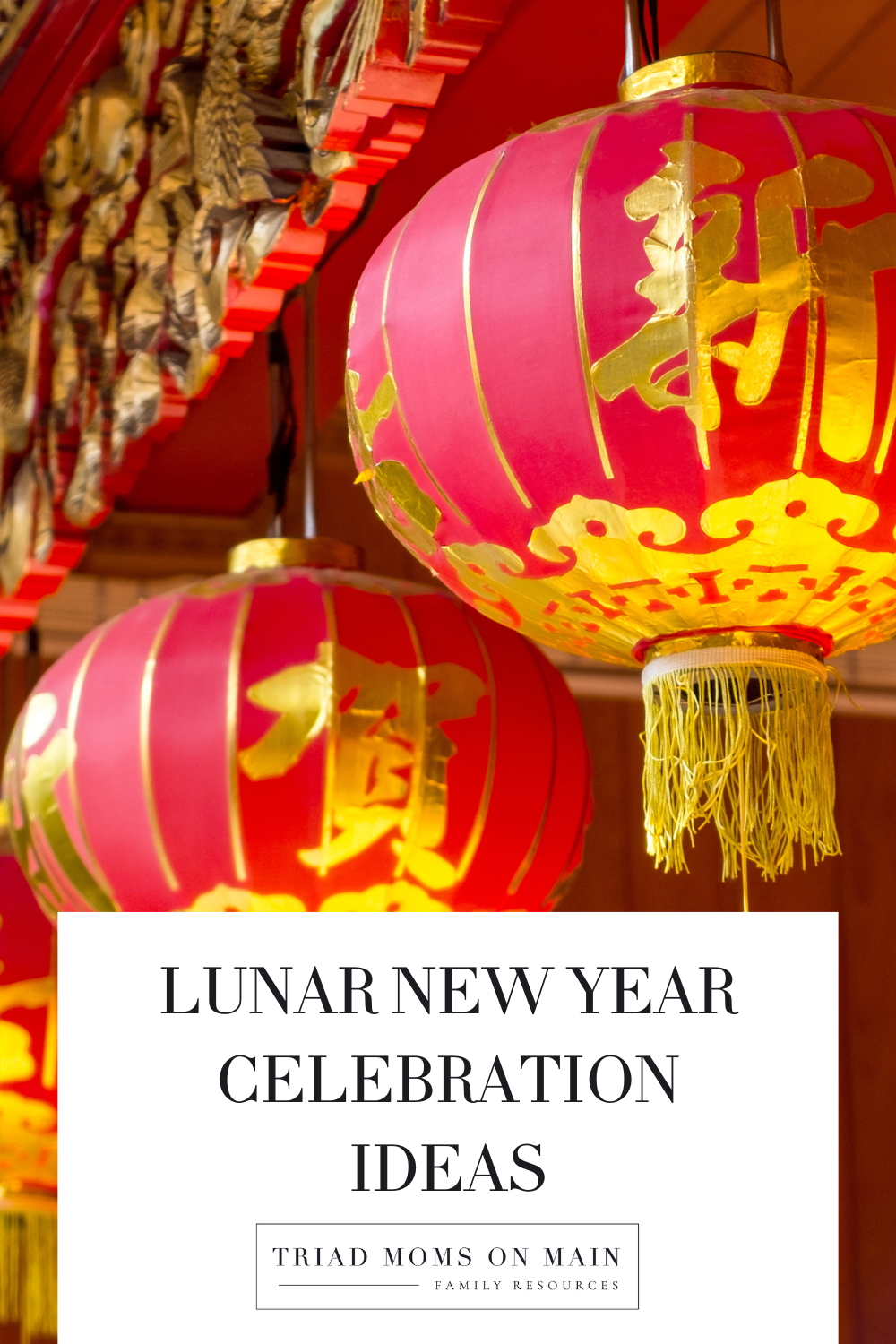
- The color red is another important tradition. To the Chinese people, the color red symbolizes happiness and good luck. Most children get new, red clothes to wear in preparation for the Chinese New Year and Spring Festival. The color red is popular for clothes, and most of the Chinese New Year’s decorations are also the color red. Common decorative items include red lanterns, firecrackers, and beautiful cuttings called window blossoms or window flowers.
- Sharing symbolic foods like dumplings and noodles. Some families even hide coins in the dumplings. If you find the coin, then that means extra good luck for you the whole year!
- Giving red envelopes with money
- Spending time with family and elders
- Watching lion or dragon dances
- The Spring Festival ends every year with the Lantern Festival. Beautiful lanterns are hung all over. These are very decorative and colorful. Children may also carry lanterns through the street. Some of the lanterns even have riddles attached to them! If you have a riddle lantern and solve it, the lantern maker may give you a small prize.
These traditions emphasize starting the year with positivity, gratitude, and intention.
How Families Can Celebrate Lunar New Year at Home
Celebrating Lunar New Year with kids doesn’t have to be complicated. Simple, intentional activities can help children learn about the holiday while having fun.
Family-Friendly Celebration Ideas
Activities during Lunar New Year have traditionally included:
- Red envelopes (紅包, hóngbāo) containing money are typically given to children by adults and elders during Lunar New Year in China. You can find your red envelopes online at Amazon or Oriental Trading Company. I found mine locally at the Super G Mart behind the customer service desk. I was able to get eight envelopes for $1.
- Traditional games, such as yut-no-ri (윷놀이, a board game) and neol-ttwi-gi (널뛰기, a seesaw game) in Korea, and, are also played during Seollal in Korea.
- Community celebrations, which often include fireworks and lion dances. Activities ranging from parades and festivals to music performances can be found across the US.
- Paying respect to ancestors: In Korea, for example, this is done through an ancestral ritual called cha-rye (차례), where families pay respects to their ancestors by offering food and performing ritualistic bows, which is believed to bring good fortune and prosperity to the family in the coming year.
- You could make some beautiful red paper lanterns or rainbow fortune cookies with your family to celebrate the Chinese New Year. Chalk Academy has some beautiful crafts that are relatively easy to do with children of all ages.
- Read children’s books about Lunar New Year
- Cook a meal together featuring symbolic foods
- For fun, look up your zodiac sign with your kids here: Chinese Horoscopes.
- Talk about goals and wishes for the new year
These activities help children connect cultural learning with hands-on experiences.
Chinese New Year vs. Lunar New Year: What’s the Difference?
You may see both terms used interchangeably, which often leads to confusion. While many people know it as Chinese New Year, it is celebrated in many countries across East and Southeast Asia, including in China, Vietnam, South Korea, the Philippines, Malaysia, and Mongolia, to name a few, with each country having its own customs and traditions. The Lunar New Year holiday bears different names depending on the country, including Spring Festival (春节, Chūnjié) in China, Seollal (설날) in Korea, and Tết (short for Tết Nguyên Đán) in Việt Nam. Many Asian Americans also celebrate Lunar New Year, and cities across the US have related events and activities.
Using “Lunar New Year” is often considered more inclusive when discussing the holiday globally.
Ways to Say “Happy Lunar New Year”
As the holiday approaches, many people look for ways to greet others respectfully.
Happy Lunar New Year
Gong Xi Fa Cai (Mandarin)
Chúc Mừng Năm Mới (Vietnamese)
Seollal greetings (Korean Lunar New Year)
Learning these greetings is a meaningful way to honor different cultures.
Traditional Lunar New Year Food
Food is central to any Lunar New Year celebration, with the Lunar New Year’s Eve dinner, known as reunion dinner for many people, typically being the most important meal when families gather. Throughout Lunar New Year celebrations, some people also choose to share a meal with close friends, such as through a potluck dinner or by cooking together.
Traditional dishes each carry special significance. In Korea, tteokguk (떡국), a traditional rice cake soup, is a staple during Seollal. It is believed that consuming tteokguk adds one year to a person’s age, signifying the start of a new cycle. The round shape of the tteok (떡), rice cake, represents the cyclical nature of life and the hope for a harmonious and prosperous new year. Click here for a tteokguk recipe. Other popular dishes include jeon (전, Korean pancake), mandu (만두, dumplings), and desserts such as yakgwa (약과, honey cookies), and hangwa (한과, traditional Korean confections).
In Việt Nam, Bánh Chưng and Bánh Tét, sticky rice cakes containing mung beans and pork wrapped in either lá dong leaves (Bánh Chưng) or banana leaves (Bánh Tét) are key dishes consumed during Tết celebrations and are also traditionally served as offerings to ancestral altars. The process of making Bánh Chưng and Bánh Tét can also be a great bonding activity for families. Click here for Lunar New Year’s food recipes and other celebration ideas for families.
Why Teaching Kids About Lunar New Year Matters
Introducing children to Lunar New Year helps build:
Cultural awareness
Respect for global traditions
Curiosity about history and customs
Appreciation for diversity
Celebrating Lunar New Year together encourages learning beyond textbooks and fosters empathy and understanding.
Frequently Asked Questions About Lunar New Year
What is Lunar New Year?
Lunar New Year marks the beginning of the year based on the lunar calendar and is celebrated across many cultures with traditions focused on renewal and good fortune.
When is Lunar New Year celebrated?
Lunar New Year typically falls between late January and mid-February, depending on the lunar cycle.
What animal represents Lunar New Year 2025?
The Snake is the zodiac animal for Lunar New Year 2025.
Is Lunar New Year the same as Chinese New Year?
Chinese New Year is one cultural celebration of Lunar New Year, but the holiday is celebrated by many cultures worldwide.
Celebrate, Learn, and Welcome the New Year Together
Whether you’re celebrating at home, learning with your kids, or attending a local event, Lunar New Year is a beautiful opportunity to reflect, reset, and welcome new beginnings together.
Bookmark this guide and revisit it each year — dates, animals, and traditions evolve, but the spirit of the Lunar New Year remains timeless.
By Guest Bloggers Meagan Robichaud, Kevin Chung, Lauren Warren and Updated by Sarah Marchwiany
Share your favorite Lunar New Year traditions and celebration ideas in the comments below!
Want to see more blogs like this and also get notifications on local events and happenings? Subscribe to our free weekly newsletters here.
Other Blogs You Might Like:
Celebrating the Chinese New Year