

NC Lighthouses Guide: Where to Visit, Climb & Explore the North Carolina Coast (2026)
Last updated: June 2026 | By Sarah Marchwiany
If you’re looking for a coastal adventure that blends history, stunning views, and genuine bucket-list moments, North Carolina’s lighthouses deliver in a way that very few experiences can match. These towering sentinels have guided sailors through some of the most dangerous waters on the Eastern Seaboard for centuries — and today they guide families toward some of the most memorable moments of any NC beach trip.
North Carolina has more lighthouses than almost any other state, and they vary dramatically: from the tallest brick lighthouse in the United States at Cape Hatteras to the oldest lighthouse still actively in service at Ocracoke (built 1823) to the only unpainted red brick lighthouse on the Outer Banks at Currituck to the octagonal stucco gem on Bald Head Island that has stood since 1817. Each one has a distinct character, a distinct setting, and a distinct story.
This guide covers every major NC lighthouse — which ones you can climb, which ones are closed for restoration in 2026, admission prices, age and height requirements, reservation info, drive times from the Triad, and tips for visiting with kids.
One critical 2026 update before you plan your trip: Cape Hatteras Lighthouse is currently closed for climbing due to ongoing restoration. See the Cape Hatteras section below for details.
Want to make a lighthouse road trip of it? NC also has a 2026 Lighthouse Challenge — visit all 10 NC lighthouses by December 31, 2026 and earn a personalized certificate plus a free lighthouse climb. See the challenge section at the bottom of this post.
NC Lighthouses Map
Outer Banks Lighthouses
The Outer Banks are home to some of the most iconic lighthouses in North Carolina. From Corolla down to Ocracoke, these towering coastal structures have guided sailors safely for generations. Many of these lighthouses are climbable and located near family-friendly beaches, picnic areas, and nature trails. Parents appreciate the photo ops, while kids love the adventure of climbing tall towers and hearing stories of shipwrecks and storms. Don’t forget to stop in the gift shops or visitor centers—many offer kid-friendly exhibits and ranger talks that bring North Carolina’s maritime history to life.
Bodie Island Lighthouse — Nags Head area, NC
Website: nps.gov/caha — Bodie Island Address: 8210 Bodie Island Lighthouse Rd, Nags Head, NC 27959 Phone: (252) 475-9501 Tickets: recreation.gov — Bodie Island Lighthouse Drive time from Greensboro: Approximately 4.5 hours via US-64 East to US-158 North
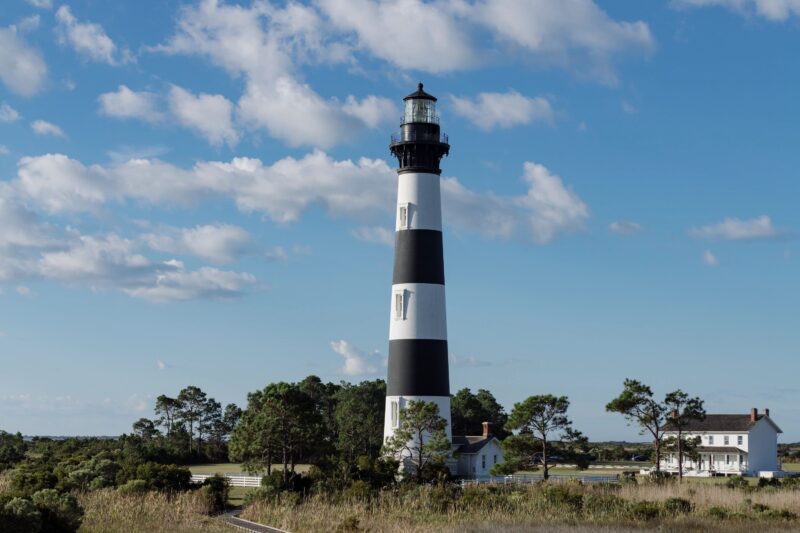
Despite its common name, the Bodie Island Lighthouse (pronounced “body”) sits not in Nags Head proper but about 10 miles south, at the northern entrance to Cape Hatteras National Seashore near Oregon Inlet. Its bold black-and-white horizontal stripes make it one of the most visually distinctive lighthouses in all of NC — and the marsh and sound setting gives it a beautifully peaceful atmosphere unlike the more exposed lighthouse sites.
The current lighthouse is actually the third built on this site. The original from 1847 was abandoned due to a poor foundation. A replacement was completed in 1859 but was blown up by retreating Confederate troops in 1861 to prevent Union forces from using it. Today’s structure dates to 1872 and remains one of the best-preserved lighthouse complexes in the Southeast.
At 156 feet with 219 steps — the equivalent of climbing a 10-story building — the climb takes you to views of Pamlico Sound and the Atlantic Ocean simultaneously on a clear day.
Climb status: Open for climbing — 2026 season runs April 22 through October 12 Hours: April 22 – May 21: Wednesday through Saturday, climbs every 20 minutes from 9:00am – 12:00pm and 2:00pm – 4:20pm (closed 12:20pm – 1:40pm) May 22 – October 12: Daily, climbs every 20 minutes from 9:00am – 5:00pm Admission: $10 per adult; $5 for seniors and children 11 and under Reservations: Required — tickets go on sale at 7:00am on the day of your climb at recreation.gov; maximum 8 tickets per time slot Height requirement: 42 inches minimum — children will be measured before climbing Weight limit: 260 lbs Children 11 and under: Must be accompanied by an adult 16 or older; children must be capable of climbing all steps on their own
What to do nearby: The Keepers’ Quarters on site houses a visitor center and museum with excellent exhibits on OBX maritime history. A stroller-friendly hiking trail and boardwalk leads to a beautiful marsh overlook — free and accessible to all. Across the road, Coquina Beach is a lifeguarded National Seashore beach in summer.
Tip: Tickets sell out quickly in summer — log onto recreation.gov at exactly 7:00am the day of your planned climb to get a slot. The Full Moon Climbs are extraordinary if you can snag a ticket. There is no air conditioning, elevator, or handrail on both sides of the stairs — the lighthouse can be hot, humid, and claustrophobic. Good to know before bringing anxious or very young kids.
Cape Hatteras Lighthouse — Buxton, NC
IMPORTANT 2026 UPDATE: Cape Hatteras Lighthouse is CLOSED FOR CLIMBING in 2026 due to ongoing restoration work. The National Park Service is repairing flooring, metal workings, and windows throughout the lighthouse. The grounds, visitor center, and museum remain open. Do not plan a trip around climbing Cape Hatteras in 2026 — confirm current status at nps.gov/caha before visiting.
Website: nps.gov/caha — Cape Hatteras Address: 46379 Lighthouse Rd, Buxton, NC 27920 Drive time from Greensboro: Approximately 4.5 hours via US-64 East
Even without the climb, a visit to Cape Hatteras Lighthouse is absolutely worthwhile — it is one of the most extraordinary structures in all of North Carolina, and the history surrounding it is genuinely remarkable.
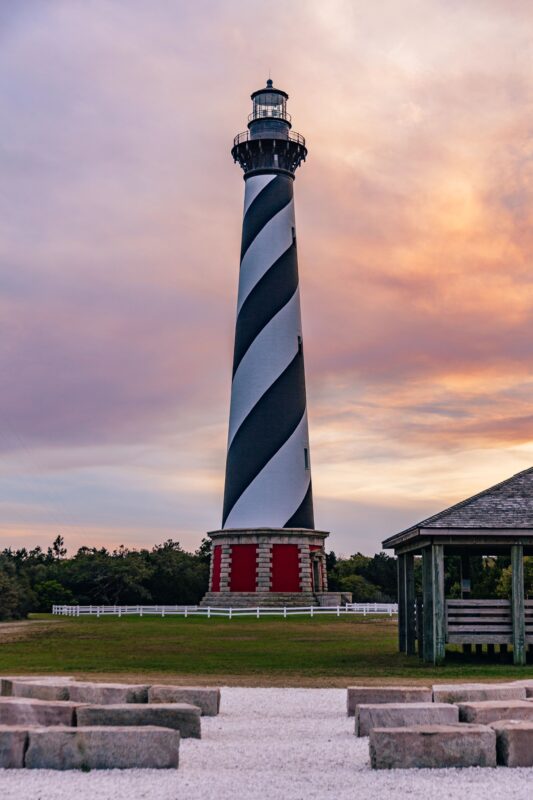
At 198 feet, Cape Hatteras is the tallest brick lighthouse in the United States — commonly called “America’s Lighthouse.” Its iconic spiral black-and-white diagonal stripe pattern is recognized worldwide. It has protected ships from the Diamond Shoals, the most treacherous stretch of water on the East Coast, since 1870 — the same waters that have claimed more than 5,000 documented shipwrecks in what sailors called the Graveyard of the Atlantic.
And then there is the lighthouse’s most extraordinary chapter: in 1999, the entire 198-foot structure was physically lifted and moved 2,900 feet inland on rails to protect it from the ocean that was steadily encroaching on its original foundation. It was one of the most technically complex engineering feats in North Carolina history and took 23 days to complete.
The grounds and museum are open daily and free to visit. The visitor center has outstanding exhibits on the lighthouse’s history, the 1999 move, and the maritime history of Cape Hatteras. Granite markers on the grounds show exactly where the lighthouse once stood and trace the path of its historic move. Walking the grounds, seeing the scale of this structure from the outside, and understanding its story makes for a genuinely compelling visit even without climbing.
When Cape Hatteras reopens for climbing (anticipated to be 2026 or 2027 — verify at nps.gov/caha): Admission has historically been $10 per adult; minimum age 9 years old; minimum height 38 inches; 257 steps; timed tickets required at recreation.gov, selling out weeks in advance in summer.
Currituck Beach Lighthouse — Corolla, NC
Website: currituckbeachlight.com Address: 1101 Corolla Village Rd, Corolla, NC 27927 Drive time from Greensboro: Approximately 4.5 hours via US-64 East to US-158 North to NC-12 North
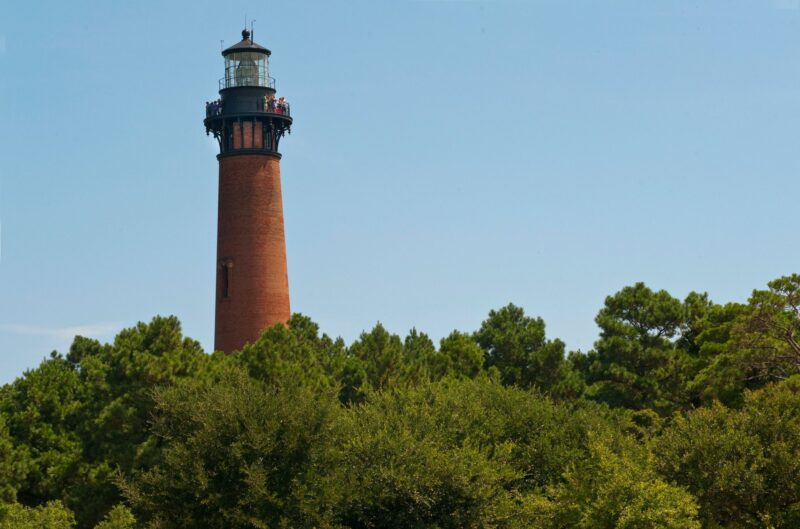
The northernmost lighthouse on the Outer Banks, Currituck Beach Lighthouse has stood watch over Corolla village since 1875. It is immediately distinctive: while most NC lighthouses are painted black and white, Currituck is made of roughly one million red bricks and was left completely unpainted — a deliberate choice that gives it a warm, distinctive appearance unlike any other lighthouse on the coast.
At 162 feet tall with 220 steps, the climb to the top rewards visitors with sweeping views of the Currituck Sound, the Atlantic Ocean, the Whalehead Club mansion, and on clear days, the wild horse beaches stretching north toward the Virginia border.
Climb status: Open for climbing spring through fall Season: Approximately March through November (check website for 2026 exact dates) Hours: 9:00am – 5:00pm daily, weather permitting Admission: $13 per person ages 4 and up; tickets purchased in person at the lighthouse (first-come, first-served — no online reservations) Height requirement: 42 inches minimum Parking: Limited in the immediate lighthouse area — arrive early, especially in summer
What to do nearby: The Currituck Beach Lighthouse is part of Historic Corolla Park, surrounded by beautiful grounds including the Outer Banks Center for Wildlife Education (free), the Whalehead Club mansion, Currituck Maritime Museum, Historic Corolla Village shops and restaurants, and the starting point for wild horse tours heading north on the beach. A genuinely full day of activities within walking distance.
Tip: Tickets are first-come, first-served and purchased only in person — plan to arrive early in summer, especially on weekends. Combine with a wild horse tour for one of the great full-day OBX family experiences.
Ocracoke Lighthouse — Ocracoke Island, NC
Website: nps.gov/caha — Ocracoke Address: Lighthouse Rd, Ocracoke, NC 27960 (accessible by ferry only) Drive time from Greensboro to Ocracoke: Approximately 4.5 hours to the Hatteras ferry terminal, then 40 minutes on the free Hatteras-Ocracoke ferry
Climb status: NOT open for climbing — exterior viewing and grounds only
The Ocracoke Lighthouse is the oldest lighthouse still actively in service in North Carolina — built in 1823, it has been guiding ships through Ocracoke Inlet for over 200 years without interruption. At just 75 feet, it is also the shortest of the major NC lighthouses, with a beautifully simple whitewashed octagonal design that feels completely different from the taller, more dramatic lighthouses to the north.
You cannot climb Ocracoke Lighthouse — it has never been open to the public for climbing — but the grounds are open dawn to dusk and free to visit. The lighthouse is surrounded by a white picket fence, mature live oaks, and maritime shrubs that give the entire site a peaceful, timeless quality. It is one of the most photographed spots on the entire Outer Banks, and the setting within Ocracoke Village is genuinely beautiful.
The real draw of Ocracoke Lighthouse is the experience of getting there. Ocracoke Island is accessible only by ferry, has no traffic lights, and has preserved a genuine remote island character that makes it feel completely removed from modern life. The free 40-minute ferry from Hatteras is itself an experience. Visiting the lighthouse is simply one beautiful moment in what is typically the most memorable day of any OBX trip. See our Family Trip to Ocracoke Island guide for everything you need to plan the visit.
Hours: Grounds open dawn to dusk, 365 days a year Admission: Free
Crystal Coast Lighthouses
Cape Lookout Lighthouse — Cape Lookout National Seashore, NC
Website: nps.gov/calo Ferry from Beaufort: islandexpressnc.com Ferry from Harkers Island: Multiple operators; search “Cape Lookout ferry Harkers Island” Drive time from Greensboro to Beaufort: Approximately 3.5 hours via I-40 East to US-70 East
Climb status: Open seasonally — check nps.gov/calo for 2026 season dates and admission
Cape Lookout Lighthouse is one of the most beautiful and remote lighthouse experiences in all of North Carolina. Reaching it is an adventure in itself: there are no bridges to Cape Lookout National Seashore. The only way to get there is by ferry from Beaufort or Harkers Island — a short but memorable boat ride across Core Sound to a 56-mile stretch of completely undeveloped barrier island with no roads, no commercial development, and no crowds by any mainland standard.
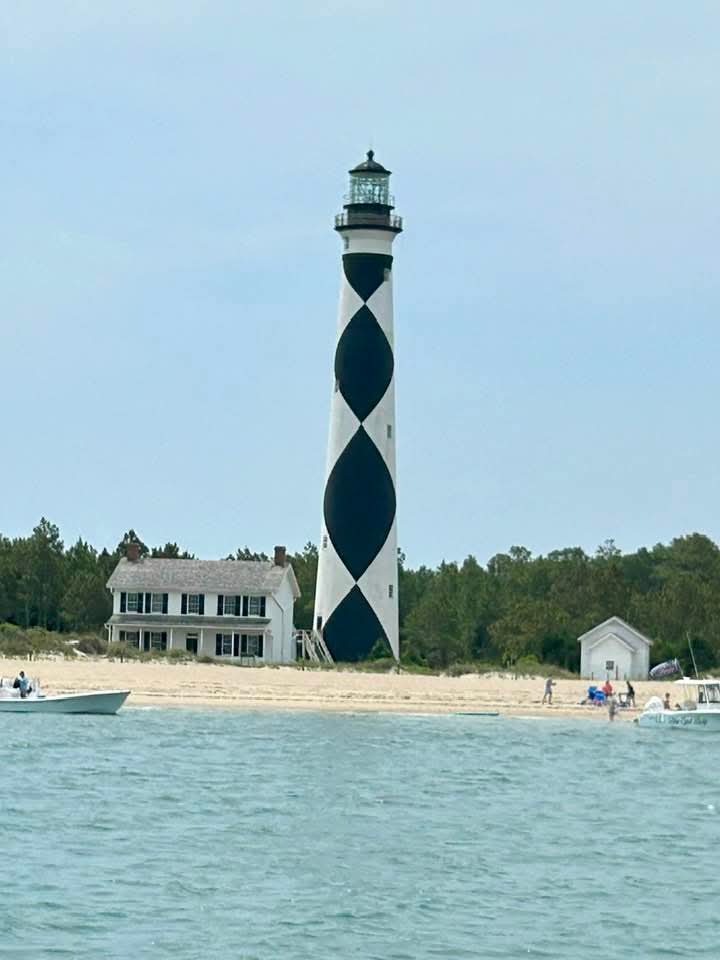
The lighthouse itself stands 163 feet with 207 steps and is immediately distinctive for its diamond pattern of alternating black and white squares — a completely different design from the spiral stripes of Cape Hatteras or the horizontal bands of Bodie Island. The lens room at the top offers extraordinary views across the barrier island, the Cape Lookout Bight, and the Atlantic.
Cape Lookout National Seashore offers some of the best shelling in all of North Carolina — bring a bag and plan to walk the undeveloped beach. Wild horses from Shackleford Banks can sometimes be spotted on the barrier island shoreline. The isolation and beauty of this experience make it one of the great NC coastal adventures for families who are willing to plan ahead and take the ferry.
Height: 163 feet Steps: 207 Ferry required: Yes — from Beaufort or Harkers Island; multiple operators; book in advance What to bring: Everything — there are no concessions on the island. Food, water, sunscreen, bug spray, and comfortable shoes.
Tip: Plan this trip in combination with a visit to Beaufort, NC — the ferry departs right from the Beaufort waterfront and a Beaufort morning + Cape Lookout afternoon makes for a perfect Crystal Coast day. See our Family Trip to Beaufort NC guide for everything to do in Beaufort.
Southern NC Lighthouses
Brunswick County Lighthouses
Oak Island Lighthouse — Caswell Beach, NC
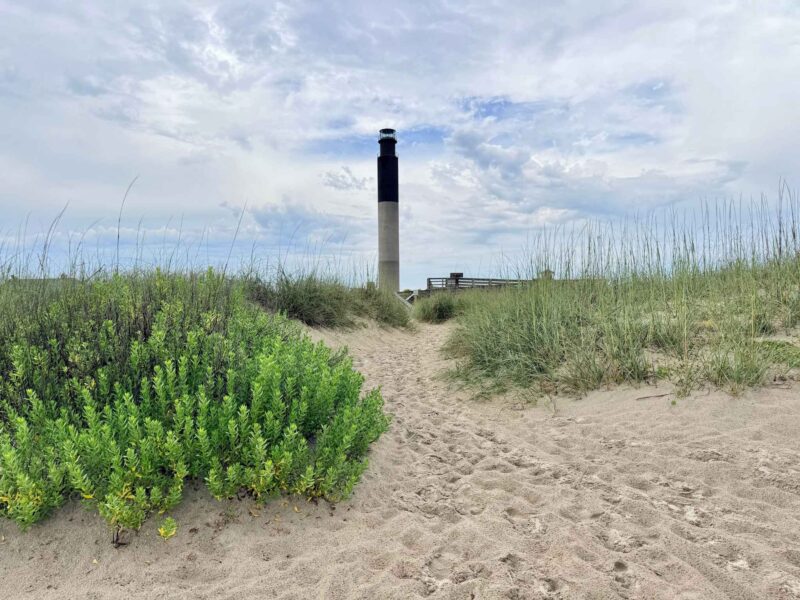
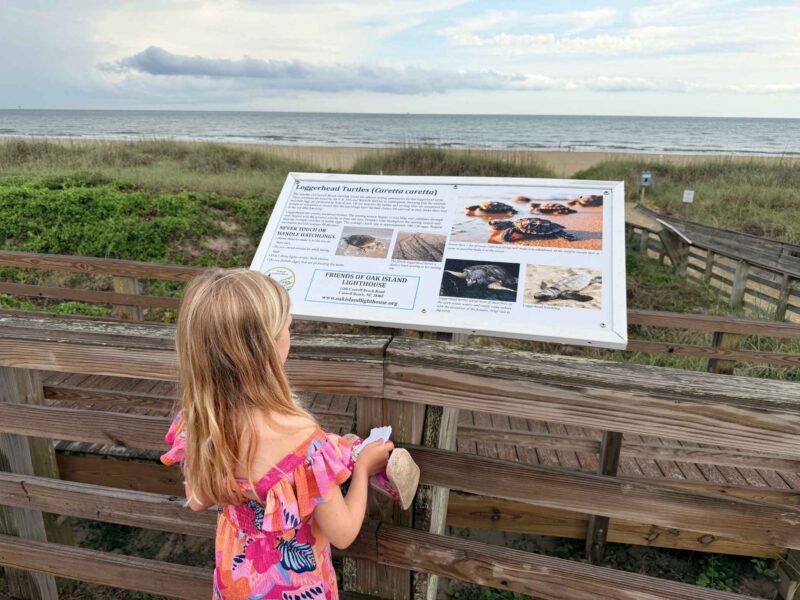
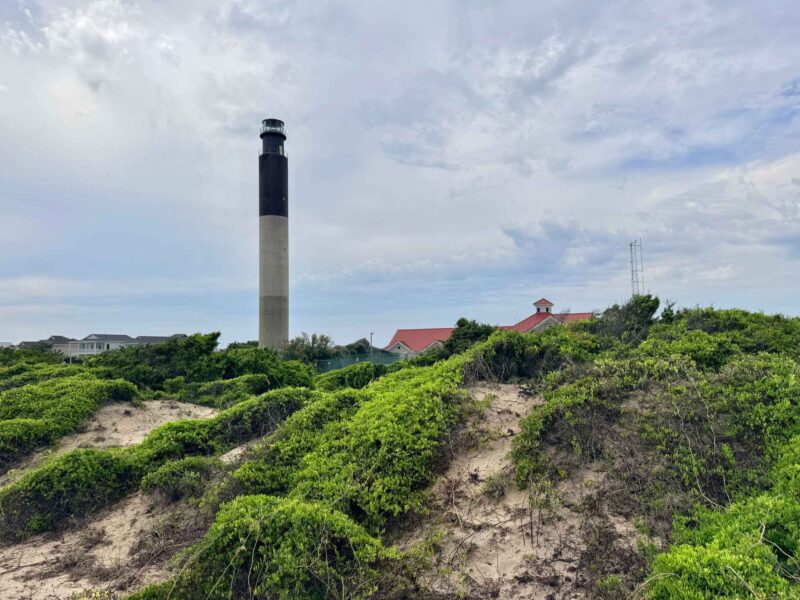
Website: oakislandlighthouse.org Address: 100 Caswell Beach Rd, Caswell Beach, NC 28465 Drive time from Greensboro: Approximately 3.5 hours via I-85 South to I-74 East
Climb status: Open — advance reservations required
The Oak Island Lighthouse is one of the most distinctive lighthouses on the entire NC coast — not for its age (it was built in 1958, making it the newest major lighthouse in NC) but for its unusual design and extraordinary power. It stands 169 feet with an unadorned concrete exterior painted in alternating horizontal bands of black, white, and charcoal gray — a practical, modern design built for function rather than aesthetics. Despite its relatively humble appearance, Oak Island Lighthouse produces one of the most powerful lights of any lighthouse in the Western Hemisphere, visible up to 24 nautical miles at sea.
Climbing is offered by reservation only through the Oak Island Lighthouse Association. Tours are limited in availability and book out significantly in advance during summer — this is not a walk-up experience.
Age requirement: 9 years old minimum Reservations: Required — see oakislandlighthouse.org for current tour dates and booking Season: Tours offered year-round on a limited schedule Tip: Walk to the viewing area on the beach across from the lighthouse for the best photograph of the full structure against the sky.
Oak Island Lighthouse is a natural companion to a stay at Oak Island, NC. See our Family Trip to Oak Island NC guide for everything to do on the island.
Old Baldy Lighthouse (Bald Head Island) — Southport, NC
Website: oldbaldy.org Ferry from Southport: baldheadisland.com Drive time from Greensboro to Southport: Approximately 3.5 hours via I-85 South to I-74 East
Climb status: Open for climbing
Old Baldy is the oldest surviving lighthouse in North Carolina — built in 1817, it has weathered storms, wars, and 200-plus years of coastal exposure. It is the oldest lighthouse structure of any kind remaining in NC, predating the Ocracoke Lighthouse (1823) by six years. Its distinctive octagonal shape with stucco-covered exterior gives it a completely different character from the tall brick lighthouses of the Outer Banks — shorter, sturdier, and worn with beautiful authenticity.
At 110 feet with 108 steps, the climb is very manageable for families. The view from the top takes in the Cape Fear River estuary, Southport, the Brunswick County coast, and on clear days the Brunswick Islands stretching to the southwest.
Getting to Old Baldy is part of the experience: Bald Head Island is accessible only by passenger ferry from Southport — there are no cars on the island (golf carts are the primary transportation). The combination of the ferry crossing, the car-free island, the lighthouse, and the stunning natural beach environment makes this one of the most memorable half-day or full-day excursions in all of Brunswick County.
Height: 110 feet Steps: 108 Ferry required: Yes — passenger ferry from Southport; see baldheadisland.com for schedules and fares Age/height requirements: Check oldbaldy.org for current climbing requirements Admission: Small fee; see oldbaldy.org for current pricing
Tip: Combine with a morning in Southport before catching the afternoon ferry to Bald Head. Southport has excellent waterfront dining, the NC Maritime Museum at Southport (free), and Fort Johnston Museum (free). See our Southport NC Family Trip guide for everything to do in town.
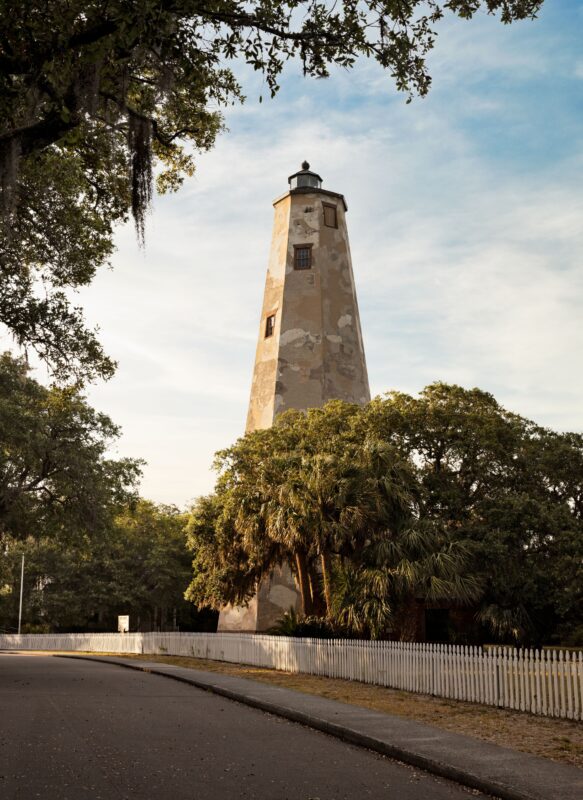
Bald Head Island Lighthouse (“Old Baldy”)
Step back in time with a visit to Old Baldy, the oldest standing lighthouse in North Carolina. Located on Bald Head Island, this charming, weathered lighthouse offers a cozy, historic contrast to the taller and flashier towers along the coast. The island itself has no cars—families get around by golf cart, bike, or on foot, making it a peaceful retreat perfect for unplugging.
To get to Bald Head Island, you’ll take a short ferry from Southport. Once there, stop by the Smith Island Museum and climb Old Baldy’s wooden spiral stairs for panoramic island views. Little ones will love the open green spaces, while parents can explore the quaint shops and cafes. It’s one of the best spots to soak in both maritime history and small-island charm. For a relaxing day full of learning and play, this lighthouse near me is worth every minute of the journey.
Planning a Lighthouse Trail for Your Family
Whether you’re checking off one lighthouse or planning a tour of all the lighthouses in North Carolina, organizing your route ahead of time can turn this into a fun summer or fall bucket list. Many families map out their stops to include beach time, ferry rides, and local seafood spots, turning each lighthouse into a full family outing. Bonus: kids often love collecting small souvenirs like stamps, magnets, or postcards at each lighthouse stop.
Keep in mind that some lighthouses have height restrictions for climbing, while others are temporarily closed for maintenance. Always check online or call ahead before making the trip. Bring water, sunscreen, bug spray, and a sense of curiosity—you’re not just seeing lighthouses, you’re connecting your kids with North Carolina’s rich coastal legacy.
Final Thoughts on Visiting NC Lighthouses
Lighthouses are more than just photo ops. They’re symbols of resilience, guidance, and history. Visiting NC lighthouses offers families the perfect blend of education and exploration. Whether you’re chasing the sun in the Outer Banks, relaxing on Bald Head Island, or wandering the quieter corners of Ocracoke, there’s a lighthouse—and a memory—waiting for you. So the next time you’re searching for “lighthouse near me,” remember that the North Carolina shoreline is dotted with treasures just waiting to be discovered.
Want to see more blogs like this and also get notifications on local events and happenings? Subscribe to our free weekly newsletters