
Sarah P. Duke Gardens Durham NC: Complete Guide + Cherry Blossom Tips (2026)
Last updated: June 2026 | By Sarah Marchwiany
If you are looking for one of the most beautiful free things to do in North Carolina, Sarah P. Duke Gardens in Durham belongs near the top of your list.

Located on the western edge of Duke University’s main campus, this 55-acre botanical garden welcomes more than 600,000 visitors each year — making it one of the most visited attractions in the entire state. And yet, despite its popularity, it never feels crowded in the way that paid tourist attractions do. The gardens are vast enough to absorb visitors, and there is always a quiet corner to find when you want one.
Whether you are visiting for the legendary cherry blossom season, planning a family outing, looking for a beautiful date spot, or just want to spend a morning somewhere genuinely peaceful, Duke Gardens delivers in every season. Best of all, admission is completely free and the gardens are open 365 days a year, dawn to dusk.
This guide covers everything you need to know before visiting — the highlights, cherry blossom tips, seasonal guide, parking, what to do nearby in Durham, and practical info for families.
Address: 420 Anderson St, Durham, NC 27708
Website: gardens.duke.edu
Phone: (919) 684-3698 Instagram: @dukegardens
Admission: Free Hours: Open daily, dawn to dusk, 365 days a year Drive time from Greensboro: About 55 minutes via I-40 East Drive time from Winston-Salem: About 1 hour 15 minutes via I-40 East Drive time from Raleigh: About 25 minutes via I-40 West Drive time from Charlotte: About 2.5 hours via I-85 North
Why Visit Sarah P. Duke Gardens
Sarah P. Duke Gardens is known for its stunning seasonal blooms, peaceful walking paths, kid-friendly exploration, and beautiful photo opportunities. It is one of those places where you can slow down, explore, and enjoy nature right in the middle of the city.
Cherry Blossom Season at Sarah Duke Gardens
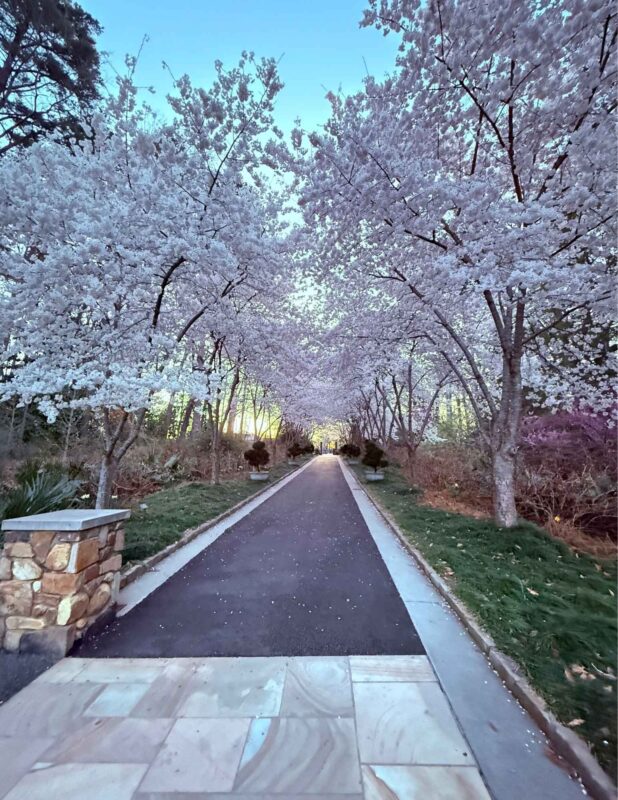
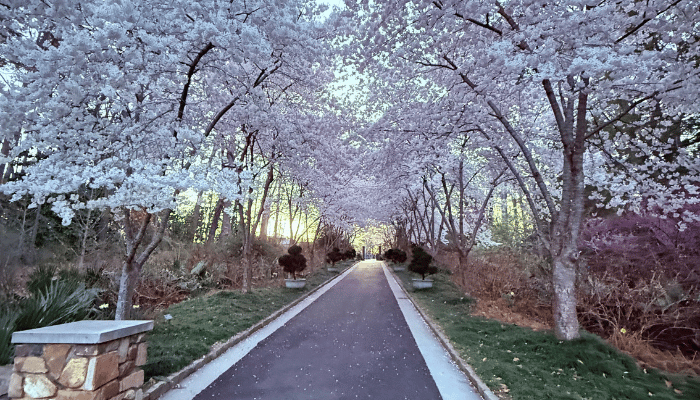
Cherry blossom season is hands-down the most popular time to visit Duke Gardens — and for good reason. When the ornamental cherry trees bloom, the area between the Gothic Gate and the Mary Duke Biddle Rose Garden transforms into one of the most photographed scenes in all of North Carolina. Pink and white blossoms drape the branches above the garden paths, the reflective ponds mirror the color overhead, and the spires of Duke Chapel frame the background.
It is genuinely breathtaking. And it is free.
When do the cherry blossoms bloom at Duke Gardens? The typical bloom window is mid-to-late March, but the exact timing shifts year to year depending on winter temperatures and spring warmth. An early warm spring can push blooms into early March. A cold, slow spring can delay them into early April. There is no reliable fixed date.
How to find the cherry blossoms: The cherry blossom trees are located between the Gothic Gate and the Mary Duke Biddle Rose Garden and Roney Fountain. This area is not prominently marked on the visitor map, so use the Gothic Gate as your starting landmark and walk toward the Rose Garden — you will find them.
How to time your visit perfectly: Follow @dukegardens on Instagram. The gardens team posts regular bloom updates starting in early March showing exactly how the trees are progressing. This is the single most reliable way to know when to go. The peak bloom window typically lasts 7-14 days, so timing matters.
Tips for visiting during cherry blossom season: Go on a weekday if possible. Weekend mornings during peak bloom are very popular. Arrive early — the soft morning light makes for the best photos, and the gardens are quieter before 10am. The bloom is weather-dependent. Rain, wind, and warm temperatures after peak can shorten it quickly. Even if you miss peak bloom, the weeks surrounding it have beautiful early and late-stage blossoms worth seeing.
Garden Highlights: What to See at Sarah P. Duke Gardens
Mary Duke Biddle Rose Garden and Roney Fountain
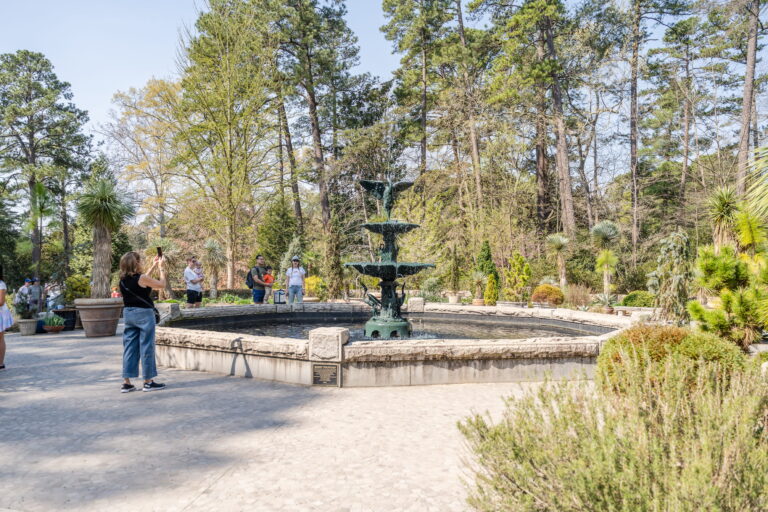
The central formal garden area of Duke Gardens is anchored by the Roney Fountain — a grand, tiered water feature surrounded by meticulously maintained rose displays. The roses peak in late spring (May-June) and again in early fall, but the formal garden is beautiful year-round. This is one of the most commonly photographed spots in the gardens and an excellent starting point for first-time visitors. The structured layout of the beds, the symmetry of the plantings, and the fountain at the center create the kind of scene that makes everyone reach for their phone camera.
Meyer Bridge
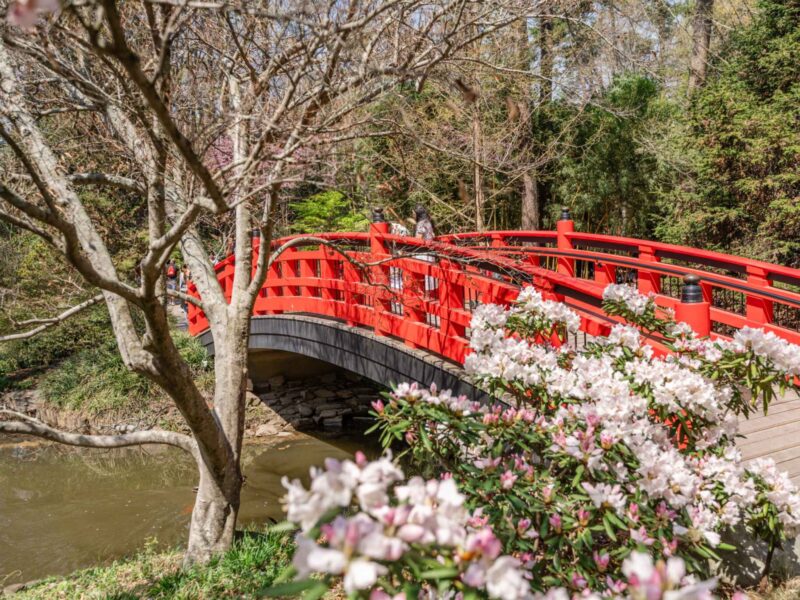
The bright red arched bridge is one of the most iconic features of Duke Gardens and one of the most recognizable landmarks on Duke University’s campus. It spans a section of the Asiatic Arboretum and offers beautiful views in every direction — lush plantings on either side, the pond below, and the forested arboretum beyond. The bridge is a must-see for photographers and a natural focal point on any walking route through the gardens. The contrast of the vivid red against the green and floral surroundings is striking in any season.
Terraces, Fish Pool and Pergola
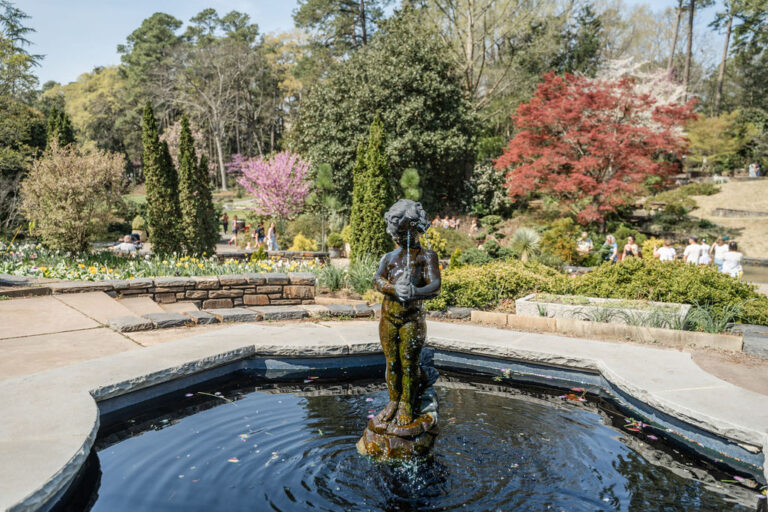
One of the most beloved spots for families with young children, the terraced area leading down to the ornamental fish pool is endlessly entertaining for kids. Koi fish swim in the shallow pool, ducks often stop by, and the surrounding plantings change beautifully with the seasons. The Cindy Brodhead Pergola provides shaded seating, and the Frances P. Rollins Overlook above offers a panoramic view of the terrace gardens — one of the best vantage points in the entire garden. Plan to linger here longer than you expect.
Waterfowl Observation Area

Tucked into a quieter corner of the gardens, the Waterfowl Observation Area is a peaceful spot for wildlife watching. Ducks, geese, turtles, herons, and other small animals are regularly spotted here. For families with young kids who need a break from structured walking, this is an ideal place to slow down, observe, and let the little ones discover nature at their own pace. Early morning visitors often see the most wildlife activity.re.
Asiatic Arboretum
A beautiful and distinctive section of the gardens devoted to plants from Asia, the Asiatic Arboretum includes flowering cherries, Japanese maples, azaleas, and a stunning variety of trees and shrubs that create a distinctly different atmosphere from the formal English-style gardens. This is where the Meyer Bridge is located, and it’s one of the most beautiful sections for a slow, contemplative walk. The seasonal changes here are particularly dramatic — spring brings cherry blossoms and azaleas, summer brings lush green canopy, and fall turns the Japanese maples brilliant red and orange.
H.L. Blomquist Garden of Native Plants
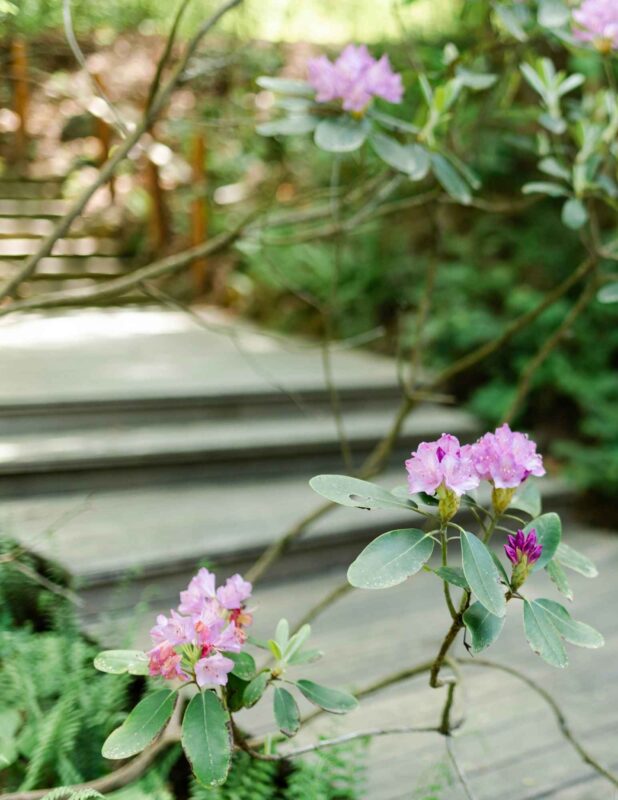
One of the most educational sections of Duke Gardens, the Blomquist Garden covers 8 acres and features over 900 species of native Southeastern plants arranged in naturalistic habitats — piedmont woodlands, mountain coves, bogs, meadows, and stream banks. It’s a wonderful way to learn about the native plant communities of North Carolina and the Southeast. Birdwatching here is excellent, especially during spring and fall migration.
Historic Terraced Gardens and Overlook
 Photo Credit. Visit NC
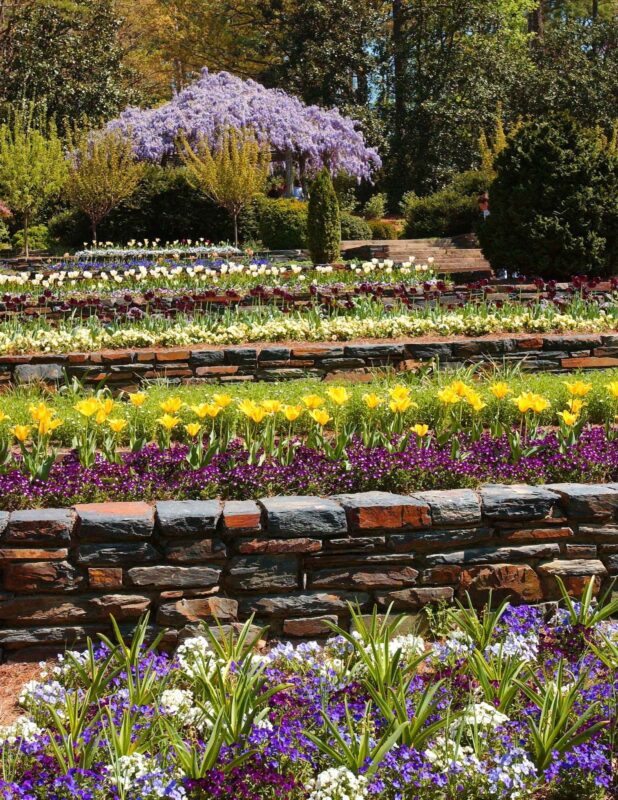
The original historic section of the gardens, designed by landscape architect Ellen Biddle Shipman in the 1930s, features a series of terraced gardens descending from the main overlook with seasonal plantings, cut flower beds, and views across the full scope of the formal garden below. This is the heart of the original garden design and where the classic Duke Gardens photographs are typically taken.
Duke Chapel

While not technically part of the gardens, Duke Chapel is immediately adjacent and absolutely worth a visit. One of the most beautiful university chapels in the United States, the Gothic-style building with its 210-foot tower is stunning both inside and out. The combination of Duke Chapel and Duke Gardens in a single visit is one of the most beautiful free experiences in North Carolina.
A Complete Seasonal Guide to Duke Gardens
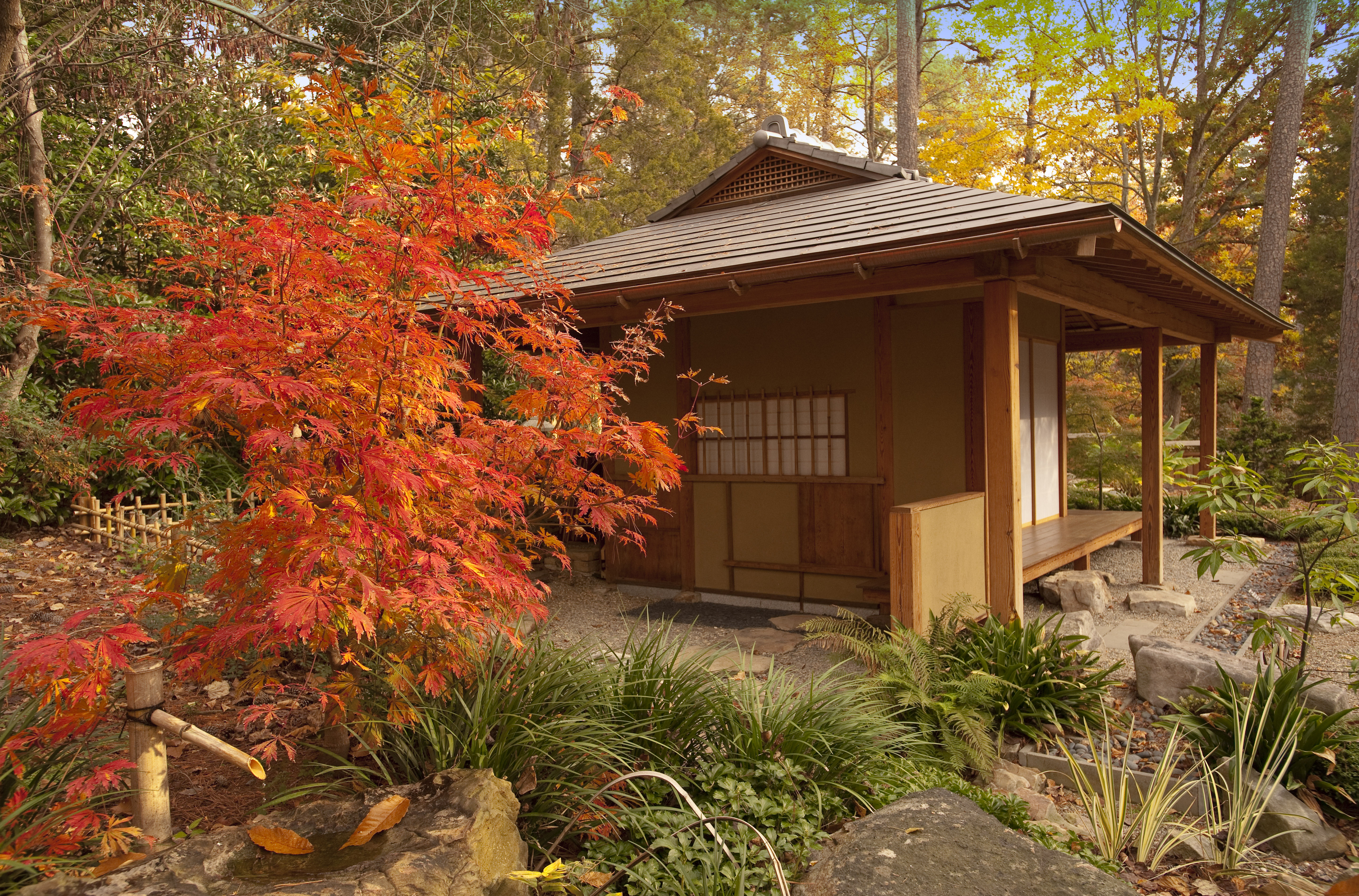
Photo Credit. Visit NC
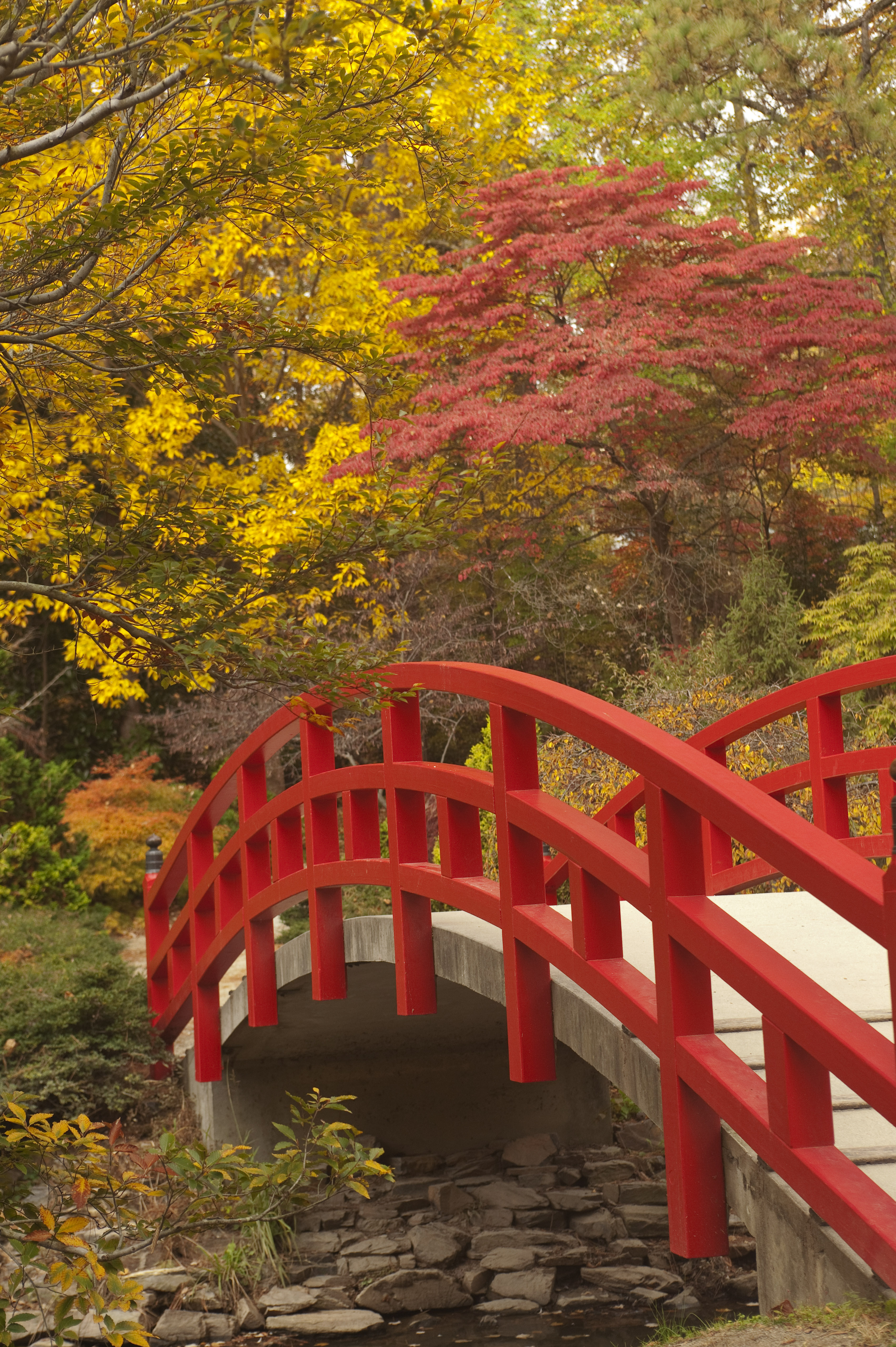
Photo Credit. Visit NC
Duke Gardens is genuinely beautiful in every season — and the experience changes dramatically throughout the year.
Spring (March-May) — The most popular season, with cherry blossoms in mid-to-late March, followed by tulips, daffodils, flowering dogwoods, azaleas, and wisteria through April and May. The Asiatic Arboretum is at its most spectacular. Crowded on weekends during peak bloom — visit on weekdays for a quieter experience.
Summer (June-August) — The Rose Garden hits its first major peak in late May to June with hundreds of rose varieties in bloom. The gardens are lushly green, daylilies and summer perennials are in full color throughout July and August. Summer evenings are particularly lovely when the heat of the day has eased.
Fall (September-November) — Fall foliage in the Asiatic Arboretum, particularly the Japanese maples, is stunning from mid-October through early November. The gardens are significantly less crowded than spring, making fall one of the best-kept-secret seasons to visit. Late-season perennials and ornamental grasses add texture and interest throughout.
Winter (December-February) — The gardens are quieter and more contemplative in winter, but far from empty. Camellias bloom from November through March, providing unexpected color during the coldest months. The structure of the garden — the hardscape, the bare trees, the evergreen plantings — becomes visible in a different and beautiful way. Winter light makes for extraordinary photography.
Practical Info: Parking, Hours & Tips for Visiting
Hours: Open daily, dawn to dusk, 365 days a year including all holidays.
Admission: Free. The gardens always have been and remain completely free to visit.
Parking: Parking on Duke’s campus can be confusing, especially during cherry blossom season when the gardens are at peak popularity.
For weekend visits: Use H Lot at 2000 Lewis Street — this is the most convenient free parking option near the gardens on weekends. Street parking along Anderson Street is also available.
For weekday visits: Some campus lots require a permit on weekdays. Check the Duke University parking website before arriving, or use the H Lot which is generally free on weekends and evenings.
Accessible parking: Accessible spaces are available near the main garden entrance. Contact the gardens office at (919) 684-3698 for specific accessibility information.
Note on the main entrance parking area: The main entrance parking has been undergoing construction improvements — check the gardens website for current status before your visit.
Stroller and wheelchair accessibility: Most garden paths are paved and accessible. Some sections of the Blomquist Garden of Native Plants involve natural surfaces that are less stroller-friendly. The main formal gardens and Asiatic Arboretum sections are very accessible.
What to bring: Water bottles — there are limited concessions on site Snacks or a picnic — picnicking is allowed on the garden grounds and highly recommended A camera or fully charged phone Comfortable walking shoes — you will cover 1-3 miles depending on how much you explore Layers in spring and fall — temperatures can shift significantly throughout the day
Visiting Duke Gardens with Kids
Duke Gardens is an excellent outing for families with children of all ages. A few tips for making the most of it:
- The fish pool at the Terraces is the single biggest hit with young kids — koi fish are endlessly fascinating and the shallow pool is safe and easy to view.
- The Waterfowl Observation Area is another excellent stop for children, with ducks, turtles, and small birds to spot.
- Bring a scavenger hunt for kids — a simple list of things to find (a red flower, a koi fish, a stone bridge, a turtle, a bench) turns the walk into a game.
- The gardens are entirely free and open — if children need to run, there is open lawn space. The pace is flexible and nobody is hurrying you through.
- The walk from the gardens to Duke Chapel takes about 5 minutes and adds a genuinely magical element to any visit — the chapel interior is open to the public and the scale is impressive even to young children.
Also check out our post: The Ultimate Day Trip to Durham, NC with Kids for other fun things to do in the area with kids.
What to Do Near Duke Gardens in Durham
Duke Gardens makes an excellent anchor for a full day trip to Durham. Here are the best things to pair it with:
Duke Chapel — 5 minutes on foot from the gardens. Free. Stunning Gothic architecture and an extraordinary pipe organ.
Durham Farmers’ Market — Open Saturday mornings at Durham Central Park. Local produce, prepared food, artisan goods. A wonderful pre-gardens breakfast stop.
Museum of Life and Science — One of the best children’s museums in NC, featuring a butterfly garden, dinosaur trail, live animal exhibits, and a Carolina SkyTrak ride. About 10 minutes from Duke Gardens.
NC Museum of Natural Sciences at Midtown — The Prairie Ridge Ecostation in Raleigh is about 25 minutes away for a full Triangle museum day.
Food & coffee near Duke Gardens: Cocoa Cinnamon — beloved Durham coffee house on Watts Street, 10 minutes from the gardens. Parker and Otis — eclectic general store and cafe on Foster Street, great for a quick bite. Dame’s Chicken & Waffles — a Durham institution, 15 minutes from the gardens. Bull City Burger and Brewery — excellent local brewery with great burgers and a family-friendly atmosphere.
See our full Durham day trip guide for more ideas on spending the day in Durham.
FAQs About Sarah P. Duke Gardens
Is Sarah P. Duke Gardens free?
Yes — admission is completely free. The gardens are open to the public 365 days a year, dawn to dusk, with no admission charge. Parking may have a fee depending on where you park and what time you visit — the H Lot at 2000 Lewis Street is the recommended free weekend option.
When do the cherry blossoms bloom at Duke Gardens?
Cherry blossoms at Duke Gardens typically bloom in mid-to-late March, but exact timing varies each year based on winter temperatures and spring weather patterns. The bloom window is usually 7-14 days. Follow @dukegardens on Instagram for real-time bloom updates starting in early March — this is the most reliable way to time your visit.
Where exactly are the cherry blossoms at Duke Gardens?
The ornamental cherry trees are located between the Gothic Gate and the Mary Duke Biddle Rose Garden and Roney Fountain. The area is not prominently labeled on the visitor map — use the Gothic Gate as your landmark and walk toward the Rose Garden to find them.
How long should you spend at Duke Gardens?
Most visitors spend 1-3 hours exploring the main garden areas. If you want to explore the full 55 acres including the Blomquist Garden of Native Plants and the Asiatic Arboretum thoroughly, plan for 3-4 hours. During cherry blossom season, many visitors spend longer lingering and taking photographs.
Is Duke Gardens stroller-friendly?
Yes — most paths in the main formal gardens and Asiatic Arboretum are paved and accessible for strollers and wheelchairs. Some sections of the Blomquist Garden of Native Plants involve natural terrain surfaces. It’s one of the more stroller-friendly botanical gardens in North Carolina.
Are dogs allowed at Duke Gardens?
Yes — dogs on leashes are welcome in most areas of the gardens. Please clean up after your pet and be respectful of other visitors and the plantings.
Is there food at Duke Gardens?
There are no permanent dining facilities inside the gardens, but you are welcome to bring snacks and picnic on the grounds. Several excellent restaurants and coffee shops are located within a 10-15 minute drive on Duke’s campus and in downtown Durham.
How far is Duke Gardens from Greensboro?
About 55 minutes via I-40 East — close enough for a comfortable day trip from Greensboro or anywhere in the Triad. From Winston-Salem, it is about 1 hour 15 minutes via I-40 East.
What is the best season to visit Duke Gardens?
Every season has something beautiful to offer. Spring (March-May) is most popular for cherry blossoms, tulips, and azaleas. Summer brings lush greenery and peak rose blooms. Fall is spectacular for Japanese maple foliage with fewer crowds. Winter offers quiet contemplative beauty and camellia blooms. There is truly no bad time to visit.
Can you see Duke Chapel from the gardens?
Yes — Duke Chapel is visible from several points within the gardens, and the two are connected by a short walk on campus. The combination of the gardens and the chapel is one of the most beautiful free experiences in North Carolina. The chapel is open to the public at no charge.
Is Duke Gardens good for photography?
It is one of the best photography destinations in North Carolina. The iconic red Meyer Bridge, the cherry blossoms reflected in the ponds, the Roney Fountain, the koi pool terraces, Duke Chapel in the background — every section of the gardens offers extraordinary shots. Cherry blossom season particularly draws photographers from across the state. Early morning light is the best for photography throughout the year.
What parking lot should I use for Duke Gardens on weekends?
Use H Lot at 2000 Lewis Street for weekend visits — it is the most convenient and typically free option near the gardens on weekends. Street parking along Anderson Street near the main entrance is also available. During peak cherry blossom season, arrive early to secure a spot.
Looking for more NC day trip ideas from the Triad? Check out our free things to do in the Triangle guide and our Durham day trip guide. If you are in the Triad check out Explore the Best Outdoor Gardens in Winston‑Salem, Greensboro & Beyond
Want more NC travel guides? Subscribe to our free weekly newsletter for the best of the Triad and North Carolina delivered every week.