
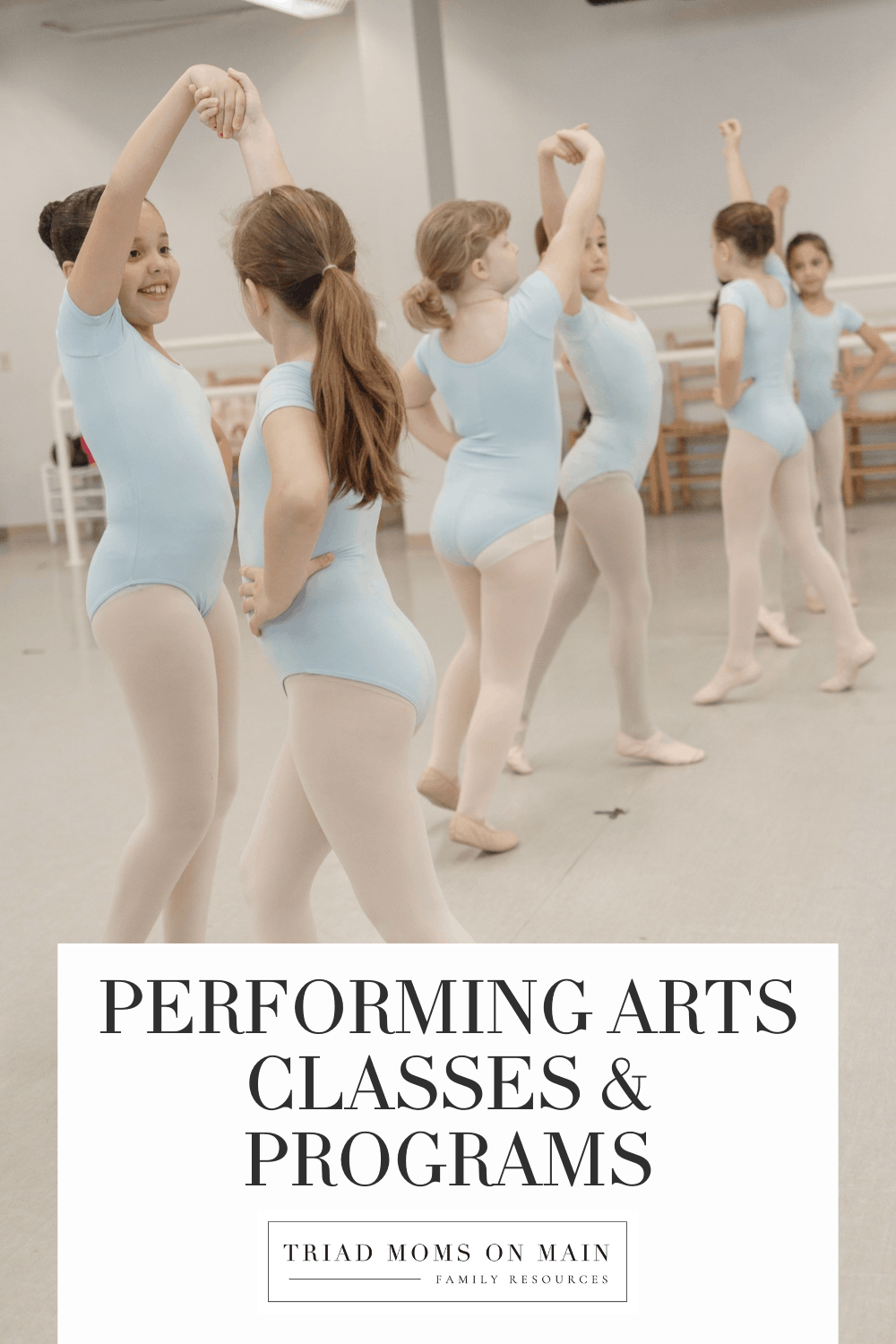
Best Performing Arts Classes in the Triad
Finding performing arts classes is one of the best ways to introduce kids to creativity, confidence, and self-expression. Whether your child loves to sing, dance, or act, the Triad offers a wide variety of programs to explore. From local theater groups to professional dance studios, families can choose from classes perfect for every age and skill level. These engaging programs help children step into the spotlight, build new skills, and enjoy an enriching, hands-on arts experience.
If your child loves to sing, dance, act, or perform, there are plenty of performing arts classes for kids in the Triad. Across Winston-Salem, Greensboro, High Point, and surrounding communities, local studios and arts organizations offer a wide range of performing arts programs designed to help kids build confidence, creativity, and stage presence.
From musical theater and acting classes to dance, voice lessons, and improv workshops, the Triad has a vibrant performing arts community that welcomes beginners as well as experienced young performers. Many programs focus on helping kids develop foundational performance skills while encouraging self-expression and teamwork.
Whether your child dreams of performing on stage, wants to try something new, or simply enjoys being part of a creative group, these performing arts classes offer opportunities to learn, grow, and shine.
Below you’ll find a directory of performing arts classes and programs throughout the Triad to help you find the right fit for your child.
Why Performing Arts Classes Are Great for Kids
Performing arts programs offer much more than just time on stage. These classes help children develop valuable life skills that benefit them both in school and beyond.
Confidence and Self-Expression
Performing in front of others helps children build confidence and overcome stage fright. Acting, singing, and dancing allow kids to express themselves creatively while developing their unique voice.
Communication and Public Speaking Skills
Theater and performance classes often involve memorizing lines, projecting voices, and learning how to communicate clearly with an audience. These skills can strengthen a child’s public speaking abilities and overall communication.
Teamwork and Collaboration
Productions and group performances require cooperation. Kids learn how to work together, support their fellow performers, and contribute to a shared creative goal.
Creativity and Imagination
Performing arts classes encourage kids to explore characters, storytelling, movement, and music. This type of creative exploration helps children develop imagination and artistic confidence.
Types of Performing Arts Classes Available in the Triad
Families in the Triad can find a wide variety of performing arts programs for kids of all ages and experience levels.
Acting and Theater Classes
Acting classes invite kids to learn the fundamentals of stage performance, including character development, improvisation, script work, and stage movement. Many programs also produce plays or musicals where students can perform for live audiences.
Musical Theater Programs
Musical theater classes combine acting, singing, and choreography. These programs are ideal for kids who love performing and want to develop multiple stage skills at once.
Dance Classes
Dance is one of the most popular performing arts activities for kids. Many studios offer classes in styles such as ballet, tap, jazz, hip hop, lyrical, and contemporary dance.
Voice and Singing Lessons
Voice lessons help young performers strengthen their singing technique, breath control, and stage confidence. Some programs focus on solo singing, while others include group vocal ensembles.
Improv and Performance Workshops
Improv classes encourage quick thinking, creativity, and collaboration. These classes are often playful and interactive, helping kids build confidence while developing performance skills.
What to Look for in a Great Performing Arts Program
Choosing the right performing arts program can help ensure your child has a positive and inspiring experience.
Age-Appropriate Instruction
Look for classes designed for your child’s age group and experience level. Younger kids may benefit from playful introductory programs, while older students may prefer more advanced levels and structured training.
Experienced Instructors
Many performing arts programs in the Triad are led by professional performers, directors, choreographers, or theater educators who bring real-world experience into the classroom.
Performance Opportunities
One of the highlights of performing arts programs is the chance to perform. Many studios offer recitals, showcases, or full productions where students can share what they’ve learned.
Supportive Environment
A welcoming and encouraging atmosphere helps kids feel comfortable trying new things and expressing themselves creatively.
Benefits of Performing Arts Education
Participating in performing arts programs can positively impact children in many ways.
Builds Confidence
Standing on stage in front of an audience takes courage. Over time, performing helps kids feel more confident in their abilities and comfortable presenting themselves in front of others.
Encourages Discipline and Focus
Rehearsals, memorization, and choreography require dedication and practice. These experiences help children develop discipline and strong work habits.
Strengthens Social Skills
Performing arts classes bring kids together in collaborative settings where they learn to support one another and celebrate shared achievements.
Creates Lifelong Memories
Many children form lasting friendships and unforgettable memories through theater productions, dance recitals, and performance showcases.
Performing Arts Classes FAQs
Q: What age can children start performing arts classes?
A: Many programs offer classes starting as young as 2–3 years old, with options that grow in difficulty and structure as children get older.
Q: What types of performing arts classes are most popular for kids?
A: Popular choices include dance (such as ballet, jazz, and hip-hop), music lessons (like piano, voice, and guitar), and theatre/drama classes focused on acting, improv, and musical theatre.
Q: What should my child wear to their first class?
A: Attire varies by class type, but comfortable clothing is usually fine for a first visit. Studios often provide dress codes for dance or theatre, while music classes typically require no special attire.
Q: How do I know which performing arts program is the right fit?
A: Consider your child’s interests, class structure, location, and instructor experience. Many studios offer trial classes, making it easier to find the perfect match.
Want to see more blogs like this and also get notifications on local events and happenings? Subscribe to our free weekly newsletter.