
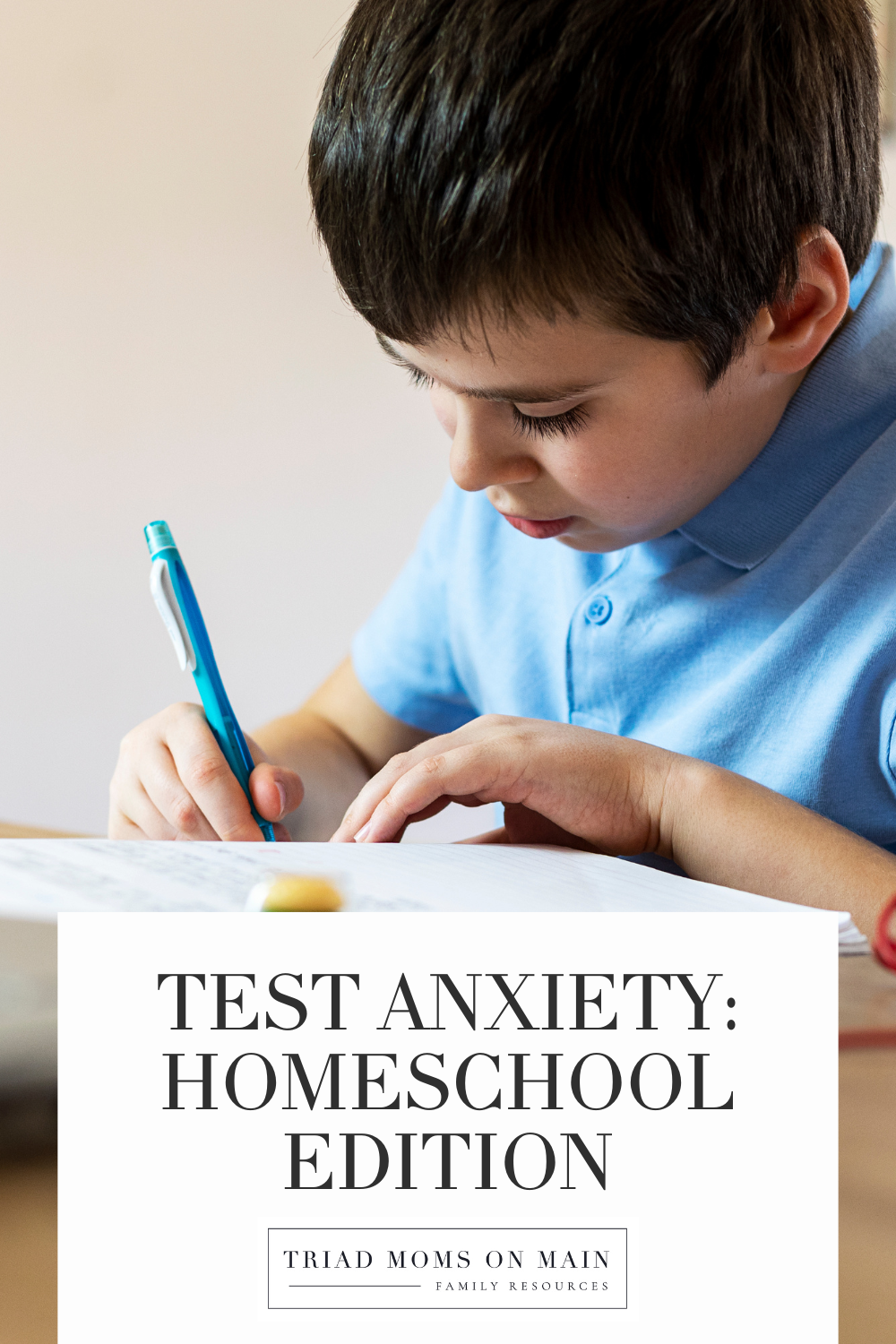
Test Anxiety for Homeschooled Children in the Triad
Homeschooling offers incredible flexibility and freedom — but even in a relaxed learning environment, test anxiety for homeschooled children can sneak in. Many parents begin homeschooling to escape the constant cycle of testing and standardized assessments, only to realize that North Carolina still requires one annual achievement test for homeschoolers. While this requirement offers valuable insight into academic progress, it can also create stress for both students and parents.
If you’re a homeschooling family in the Piedmont Triad, it’s important to understand how to approach homeschool testing in a healthy, balanced way. Testing should serve as a roadmap for growth, not a measure of your success as a teacher or your child’s worth as a learner.
Why Homeschool Testing Matters
North Carolina’s Department of Non-Public Education requires every homeschooling family to administer a nationally standardized test once per year. This guideline helps ensure your child’s education stays on track while also highlighting areas where they may need extra support.
The test itself isn’t meant to control your curriculum — it’s a checkpoint. When viewed correctly, it can help you make smart decisions about next steps in your homeschool journey. For example, if your child’s reading comprehension scores are high but math scores dip, that’s not a failure; it’s a signal about where to focus next.
Homeschool parents across the Triad — from Winston-Salem to Greensboro to High Point — often use test results as a tool for reflection, not judgment.
The Connection Between Testing and Anxiety
Even in a nurturing homeschool setting, test anxiety can appear in surprising ways. Some children get nervous at the sight of a test booklet, while others shut down if they feel they’re being evaluated. Parents, too, can feel pressure to see good scores, especially when balancing the dual role of teacher and parent.
Test anxiety for homeschooled children often stems from unfamiliarity with the testing environment. Many homeschoolers don’t take traditional exams regularly, so formal testing can feel intimidating. The good news? You can help ease that anxiety by creating a calm environment, explaining that tests are tools (not punishments), and reminding your child that one score doesn’t define their abilities.
A Test Is a Roadmap, Not a Report Card
One of the most important lessons in homeschool testing is perspective. A test should guide your teaching, not control it. Instead of focusing on a number or percentile, look at what the results tell you about your child’s learning path.
For instance, maybe your child’s test reveals that spelling needs attention, while math is a strong point. That doesn’t mean they’re behind — it means you have useful information to adjust your approach. Each homeschool student learns differently and at their own pace. A test gives you a snapshot, not the full story.
Use test results to celebrate growth, spot learning gaps, and plan what comes next. When you treat testing as part of the journey, it becomes far less stressful for everyone involved.
The Limits of Test Scores
Standardized tests are valuable, but they don’t measure everything that matters. They can’t show how your child applies knowledge in daily life, expresses creativity, or demonstrates empathy.
For example, your homeschooler may have spent weeks studying grammar and sentence structure — but that won’t necessarily appear in this year’s test results. Similarly, a child might perform poorly on a test day due to lack of sleep, nerves, or distraction, not because they didn’t understand the material.
Recognizing these limitations can help ease test anxiety for homeschooled children. Test scores are one piece of data among many. They’re helpful, but they don’t define success.
Every Child Learns at Their Own Pace
In the homeschool world, progress looks different for every child. Some kids master reading early and take longer with writing; others struggle with math but thrive in creative subjects.
Homeschool testing can highlight these differences, but it shouldn’t be a source of panic. Learning is not a race, and mastery doesn’t always happen on a schedule. Many late readers become passionate bookworms later on, and some children experience sudden leaps in understanding after long periods of steady effort.
If your child’s test results seem lower than expected, remember: steady, consistent learning matters more than one day’s score.
Reducing Test Anxiety for Homeschoolers
There are several practical ways to reduce test anxiety for homeschooled children before the big day:
- Create a calm environment. Set up a quiet, comfortable space free of distractions.
- Do a practice test. Familiarity helps children understand what to expect and lowers nerves.
- Focus on effort, not outcome. Praise your child’s concentration and persistence rather than the score.
- Keep the test low-pressure. Remind them it’s just one part of learning — not a pass or fail moment.
- Schedule breaks. Let them stretch, move, and refresh their mind between sections.
The goal is to help your child see testing as a normal part of learning, not a stressful event.
The Bigger Picture of Homeschool Success
One of the greatest benefits of homeschooling in the Triad is the freedom to customize your child’s education. You get to teach at their pace, follow their interests, and nurture their confidence. A standardized test can’t measure curiosity, creativity, or compassion — all skills that matter deeply in life.
If you or your child experiences test anxiety, remind yourself of the bigger picture. Homeschooling offers daily opportunities for growth that extend far beyond a test score. The ability to think critically, explore freely, and learn joyfully is the true measure of success.
Final Thoughts
Testing doesn’t have to be the enemy of homeschooling. When viewed through the right lens, it’s simply a helpful tool for tracking progress and celebrating growth. In the Piedmont Triad, homeschool families have access to countless support groups, co-ops, and testing resources to make the process smoother.
Whether your child excels on test day or struggles with nerves, remember that learning is lifelong — and no single test can capture everything your homeschool journey represents. Keep perspective, stay patient, and trust that your efforts are building something far more valuable than a number on a page.
📝 Homeschool Testing FAQs for Families in the Piedmont Triad
1. What homeschool testing is required in North Carolina?
Families must administer a nationally standardized test each year that measures achievement in key subjects like reading and math.
2. When should I give my homeschool test?
You can schedule your test anytime during the school year, though many Triad families choose late spring for convenience.
3. What types of tests qualify for homeschool testing in NC?
Approved options include the Iowa Test, Stanford Achievement Test, CAT, or other nationally recognized standardized assessments.
4. How do I reduce test anxiety for homeschooled children?
Keep the environment relaxed, provide practice tests, and remind your child that results are only one part of their learning journey.
5. Do I need to submit homeschool testing results to the state?
No — you keep the results on file at home, but you should retain them in case of a records request from the state.
6. Can I administer the homeschool test myself?
Yes, most tests allow parents to proctor at home, though some families prefer using local testing centers in the Triad for added structure.
7. What if my child performs poorly due to test anxiety?
Low scores from test anxiety don’t define your homeschool success; use them as feedback to adjust lessons and build confidence over time.
Other homeschooling blogs you may enjoy
Click HERE to go directly to TMoM’s Homeschool category, featuring articles from local moms and professionals!
Want to see more blogs like this and get notifications on local events and happenings? Subscribe to our free weekly newsletters here.